
Module 2 – September 21 to October 16, 2026 (4 Weeks)
Restoration of Books and Bound Paper Documents
Program Director: Konstantinos Choulis
Module 2
Workshop, 100 hours
The Structure of Books and Their Material Components
Instructor: Konstantinos Choulis, Gloria Conti
1) Safety Issues in paper and book restoration workshops
Toxic materials and conditions in the laboratory
Toxic conditions found in the field
Prevention and safety
Instruments: Gloves, masks, eye protection, ventilation
Proper disposal
2) Organization of a restoration lab
Instruments, procedures, layouts
3) Definitions and glossary
Book structure, paper terms, and procedures
4) The Structure of Books And their Material Components
As students study the nature of paper and the structure books they will make a series of book facsimiles of different historical book structures. The purpose is to give students a material and manual familiarity with the various components.
• Signature sewing methods
Use several sewing methods on blank blocks without bindings: Chain stitch on single and double supports (leather – cords), packed, two-on, tapes
End bands
Make several types of end bands: Primary sewing (single or double core), Secondary – decorative sewing (colored threads), Stuck-on end bands
Bindings
Make four bindings that illustrate components and range of process: Coptic, soft cover, full leather raised cord, modern case binding
5) Identification of materials
Cover plates: wood, card board, sticking threads
Cover materials: animal skins, fabrics
Glues and binders
Decorations: metals, gilding
6) Identification of library and archival materials
Libraries: Scrawls, manuscripts, medieval codexes, printed books
Archives: Letters, certificates, diplomas, contracts, posters, passports, receipts – bills, diaries, drawings, architectural projects, photographs, maps, stamps, albums, free documents
7) Theory of Management and Restoration of Library and Archival materials
8) Restoration of books; Students will work on the restoration of one or more old books
• Documentation of existing conditions
• Dismantling of book binding
• Consolidation
• Cleaning
• Patching and restoring
• Reassembly
• Restoration without disassembly
• Documentation of restoration
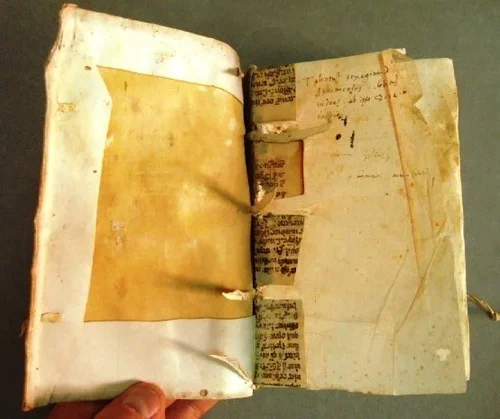
Module 2
Theory class 1, 24 hours
History of Books
Instructor: Melania Zanetti
1) History of the Codex
Evolution of bound books Nag Hamadi, St. Guthbert, Fulda, early medieval bindings, Oriental bindings, Western bindings, late medieval, Renaissance, Modern bindings.
The structure and materials of bindings: end leaves, paste downs, sewing, boards material, board attachment, spine lining, end bands, book markers, covering materials and techniques, cover and spine decoration, edges, fastenings, furniture and other metal elements – chains.
2) Evolution of book printing methods
• Sheet formats
• Pagination
3) Archival bindings
• Traditional
• Modern
3) Modern industrial binding
• Case binding
• Paper back
Module 2
Theory class 2, 24 hours
Binding Materials
Instructor: Alfonso Zoleo
1. Materials: Physics and Chemistry
• Cardboard
• Decorated papers
• Wood
• Animal skins
• Fabrics
• Strings
• Metals
• Glues
• Decorations
• Plastics
2) Deterioration factors
• Inherent material aging
• Environmental
• Biological
• Anthropic